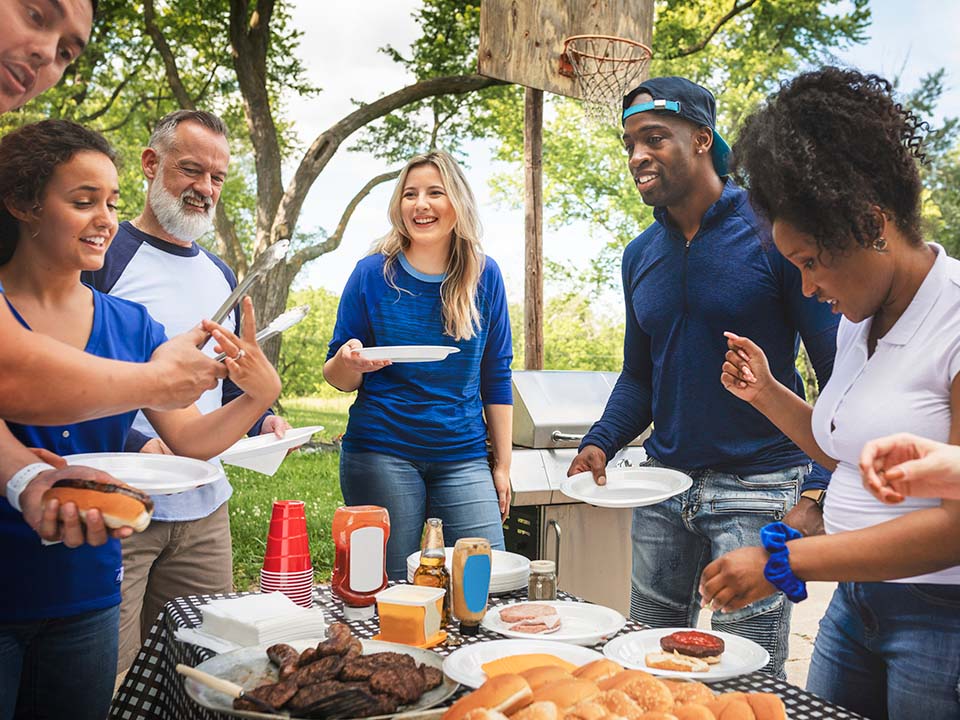
Tailgating is a fun and time-honored tradition. But tailgate party fun can quickly turn sideways when drinking alcohol leads to bad decisions, such as drinking and driving to property damage.
Even if you aren’t drinking alcohol, there are safety concerns that can get you and your fellow tailgaters in hot water. Here are seven tips to help you steer clear of stiff legal penalties.
1. Driving under the influence (DUI)
After the excitement of a game and tailgating all day, football fans are often in a hurry to get home. Depending on how much alcohol was consumed before, during and after the game, getting behind the wheel is a dangerous choice. Even if you are drinking and driving under the legal limit, impaired judgment, reduced visual function and coordination begin as soon as you consume 1 to 2 drinks.
You may be thinking that if you stop drinking before the game starts that you won’t be impaired when it’s time to go home, but that’s not always the case. While there are many factors (gender, height, weight, food consumed and medications) that contribute to how quickly an individual’s blood alcohol concentration (BAC) increases, everyone’s BAC dissipates at a rate of .016 per hour.
That means if you have a large man and a small woman who both have a BAC of .08, which is the legal limit in many states, it will take both of them 5 hours for the alcohol to completely leave their system. At a BAC of .10, it would take 7 hours for the alcohol to clear out.
The safest way to avoid trouble from driving under the influence is to have a sober designated driver. Even with a driver, you need to drink alcohol responsibly. So before you pack a drink for the road, remember that open container laws prohibit drivers and passengers from having an open container of alcohol and drinking alcohol in a car.
2. Public intoxication
While drinking alcohol is common at a tailgate party, binge drinking can get you arrested for public intoxication. Drinking games that encourage participants to finish drinks in rapid succession or take shots of liquor can put your BAC at a dangerously high level. At .06 to .15 BAC speech, memory and balance are all significantly impaired. At .16 to .30 BAC a person is likely to vomit and/or pass out. Over .30 BAC is life-threatening.
To deter binge drinking and reduce public intoxication cases, many colleges have rules about the type and amount of alcohol football fans are allowed to bring to a tailgate party. Check with your team’s tailgate guidelines for details on what type and how much alcohol is allowed at a tailgate party.
3. Underage drinking
Providing alcohol to minors – even unintentionally – can have serious consequences. Potential penalties include fines, criminal charges and license suspension for minors. Adults may also face liability if they supply alcohol directly to minors or fail to prevent access.
4. Public urination or indecent exposure
Facilities at tailgates can be limited – but using public areas inappropriately can lead to charges.
Public urination laws vary by state. In some states you would be charged with a misdemeanor. In others you could be convicted for lewd and lascivious behavior and added to the state’s sex offender list. And once you’re on that list, it’s difficult to get your name off of it. It may be even more difficult to explain to family, friends and employers why you’re on the list in the first place.
5. Public sexual activity or lewd behavior
Speaking of lewd and lascivious behavior, getting frisky with your partner at a tailgate party could lead to a multitude of charges including indecent exposure, public lewdness and mostly likely, public intoxication. Again, in some states, performing a sexual act in public could gain you the unsavory title of sex offender.
6. Fighting and disorderly conduct
Sports fans are passionate about their teams. A friendly rivalry can become heated when an exchange of words turns to trading punches. Add alcohol to the mix, and fighting can get dangerously out of hand. The penalties for assault and battery depend on the severity of the incident and injuries, and can lead to even more serious charges, such as aggravated assault.
7. Property damage and liability risks
Even if there were never any alcohol-related incidents at tailgate parties, there is still potential for accidents when you combine heavy traffic and large pedestrian crowds.
To avoid fender benders going to and from a tailgate party:
- Have a sober designated driver.
- Don’t text while driving.
- Turn down the music for fewer distractions.
A parked car is also at risk. Be aware of your surroundings while tailgating near your vehicle. Cars can be damaged by well-meaning football fans who throw a stray football through another fan’s window. Also, if not properly cooled, an unattended grill can catch fire long after you’ve gone in to watch the game. Unsecured pop-up tents, unleashed animals and objects that obstruct foot traffic can lead to a wide variety of situations where you may be liable for damages and/or facing a personal lawsuit. To ensure a safe tailgate party:
- Have a sober designated driver.
- Consume alcohol, if you choose to, in a responsible manner.
- Set up the grill and any tables on stable ground, as far away from vehicles as possible.
- Keep a fire extinguisher near the grill.
- Leave pets at home.
- Don’t impede the flow of traffic with tables or tailgate games.