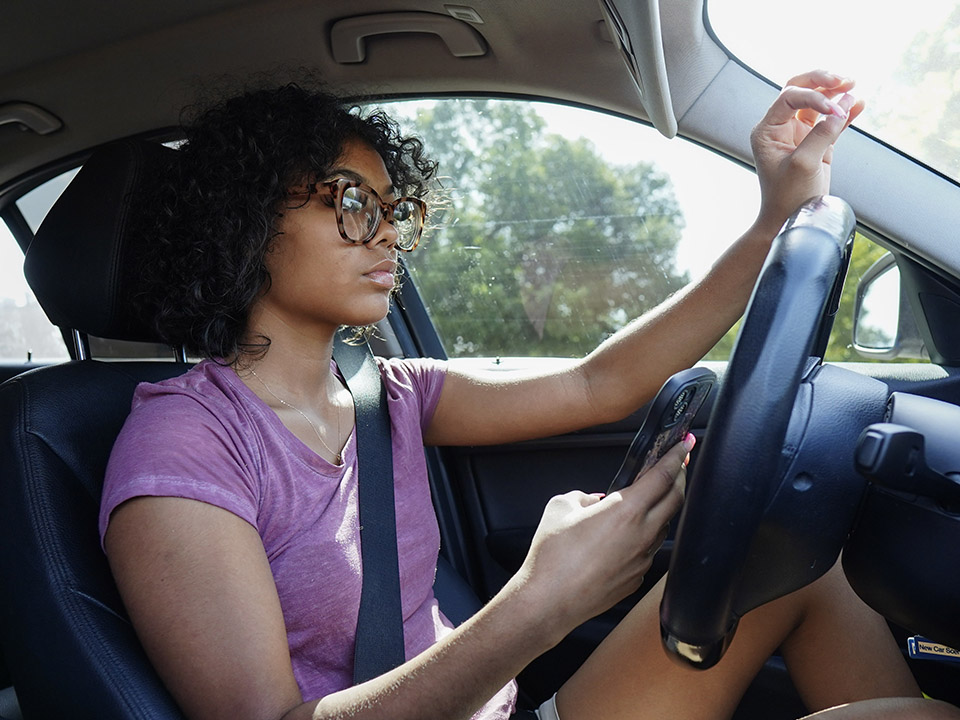
Texting and driving facts highlight how dangerous distracted driving can be – and why most states have taken steps to limit phone use behind the wheel.
Texting and driving laws by state
Texting while driving is banned in most states, with nearly all U.S. jurisdictions enforcing some form of distracted driving law. In fact, only in very few states is it legal to text and drive. All other states have some form of law against it.
In 49 states, Washington, D.C., Puerto Rico, Guam and the U.S. Virgin Islands, it is illegal for any driver to text and drive. Of these states and territories, all but six have primary enforcement laws banning texting while driving. That means police officers do not need an additional reason to pull you over and give you a ticket.
Other states have secondary enforcement, which means officers need another reason to pull you over (e.g., running a red light) before they can issue you a ticket for texting and driving.
Common signs of texting
Drivers who text while driving often display visible signs of distraction that law enforcement is trained to recognize. People who choose to text and drive, particularly teens, can be oblivious to their surroundings and the dangers of texting and driving accidents.
Do any of the following sound familiar? Keep in mind that if a police officer spots any of these behaviors, they can pull you over on suspicion of texting and driving:
- Slowing down to try and compensate for distracted driving
- Weaving between lanes
- Delayed reaction at traffic lights
- Looking down at a phone or holding one hand off the wheel
How texting and driving can affect accident investigations
In serious texting and driving accidents, cell phone records may play a role in determining what happened. Deleting the texts won't matter; most officers will go straight to your cell phone service provider for records that show texts were sent and received.
If you haven't caused an accident but an officer pulls you over on suspicion of texting while driving, the law isn't quite as clear on whether they can seize your phone and search your texts. Consenting to the search does make it legal — and some drivers even offer the phone to prove they weren't texting. However, if you don't consent, a police officer most likely can’t search your phone unless you are arrested or he/she obtains a warrant.
Distracted driving goes beyond texting
Many distracted driving laws extend beyond texting to include handheld phone use, such as taking photos or using apps while driving. Some states have completely banned the handheld use of cell phones while driving to eliminate any confusion about what is and isn't allowed. You can learn more about your state's laws here.
Distracted driving raises crash risks by 240%. Play it safe and make sure you're on the right side of the law. Eliminate as many distractions as possible when you drive.