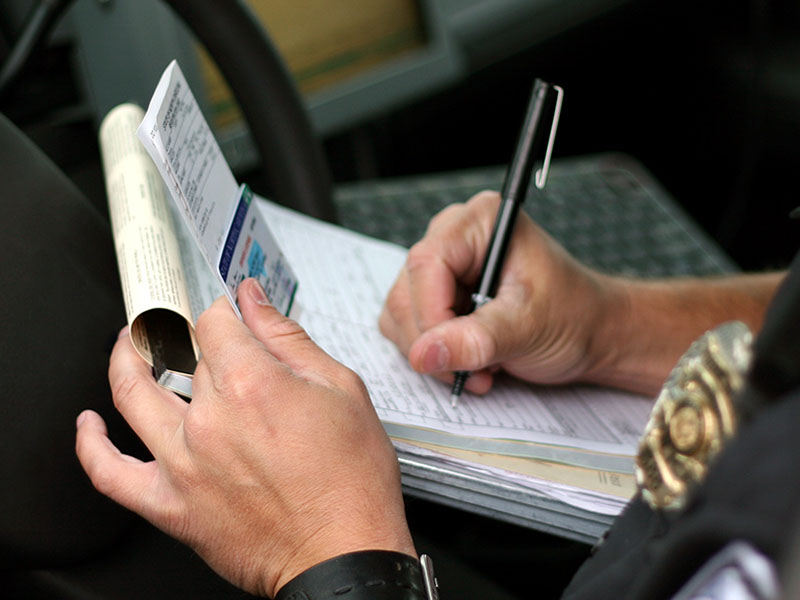
Most states use a driver’s license points system to track traffic violations. Understanding how points are assigned – and how they affect your driving record, license and insurance – can help you make informed decisions after a traffic ticket.
How points are assigned for traffic violations
In most states, points are assigned to your driving record for common moving violations, such as speeding, running a red light, driving under the influence and driving with a suspended license. The more serious the violation, the more points will be assigned to it.
How may points lead to license suspension?
Most states set a limit to the number of points you can have. If you accumulate too many points within a certain time period, your driver’s license may be suspended or revoked. For example, in California your license is suspended if you receive four points in a year or six points in two years. In some states, points stay on your record for up to 10 years.
How driver’s license points affect insurance rates
Driver’s license points can affect your auto insurance rates, depending on your insurer’s policies. Some insurance companies will regularly review how many points you have and may raise your rates if you have received a certain number in a year. Other insurance companies use their own points systems. These systems may assign more points to minor violations. Insurance companies then have a formula that calculates how much your rates will increase based on the number of points you have.
How to check points on your driving record
To find out how many points you have, check your driving history report. In many states, you can check your record online via your state’s DMV website. Look for a link labeled “driver’s license check” or something similar. If you can’t find a link on the site, you may need to submit a written request or form.
Can you remove points from your driving record?
For certain moving violations, you might be able to take a safe driving course to remove points. If you decide to look into this option, be sure that the course you sign up for is authorized by your state. Points from more serious violations, such as driving under the influence, can’t be removed from your license with a course. Generally, you just have to wait until the time period determined by your state expires.
Do driver’s license points transfer between states?
States share information with one another about violations and traffic tickets drivers receive. How this information impacts your record will depend on the state you live in and the state where you received the ticket. Some states only report certain violations (e.g., they will report a speeding ticket for 20 mph over the speed limit but not 10 mph over the speed limit). When states receive that information, it is up to that state to decide whether to add points to your record. Keep in mind that insurance companies generally don’t differentiate between an in-state and out-of-state violation: if they see it on your record, it will impact your premium.