A backyard pool can be a great way to relax and spend time with families – but it also comes with serious safety and legal responsibilities.
Every year, hundreds of children under the age of five drown in swimming pools, making it the leading cause of accidental death for children in that age range. And 87% of those fatalities occur in backyard pools.
If you’ve ever been around young children, you know they can move quickly, they can be fearless and they like to get into everything. Pool safety is critical, as a child can drown as fast as 30 seconds.
How to prevent drowning when you have a pool
Although having a backyard pool comes with some inherent dangers, you can significantly minimize the risk of tragedy by creating what are known as “layers of protection” for your pool. Examples of layers include installing physical pool barriers and pool alarms; closely supervising your child; making sure everyone in your household knows basic swimming pool safety and knows how to swim; following backyard pool laws and guidelines; instituting and reviewing pool rules and being prepared for emergencies.
1. Install pool barriers.
One of the best ways to reduce the risk of a child drowning in your pool or hot tub is to construct and maintain barriers such as pool safety fences, pool gates, power safety covers and alarms. A good barrier should prevent a child from going over, under and through the barrier to access the pool unsupervised. To prevent children from subverting the barriers, follow these guidelines from the U.S. Consumer Product Safety Commission (CPSC).
- Consider surrounding the pool with a fence on all four sides instead of having the house serve as the fourth barrier.
- Pool safety fences should be at least four feet high; five feet is even better.
- Build your fence in a way that prohibits children from using objects to climb over it and make sure the fence doesn’t have handholds or footholds that could help children scale it.
- If your home opens directly to the pool, install door alarms on all doors leading to the pool. The alarm should sound very distinct from other sounds in the home such as phones and alarm clocks. Doors should have self-closing and self-latching devices and locks that are too high for your children to reach.
- Install a power safety cover, keep it in good condition and keep the cover’s control device out of your children’s reach. Keep the cover closed any time you’re not actively supervising the pool area.
- Make sure all pool gates are self-closing, self-latching and locked. Also make sure you maintain your gates to be in good working order.
- Don’t have pet doors in any fences, doors or gates surrounding your pool, as small children could crawl through them.
- Install an underwater pool alarm that goes off whenever anyone enters the pool. As with your door alarm, make sure the pool alarm sounds distinct from all other noises in your home. Be sure you have remote alarm speakers so the pool alarm can be heard when you’re inside the house or otherwise away from the pool.
2. Install anti-entrapment safety drain covers.
Make sure your pool has anti-entrapment safety drain covers. The powerful suction from some drains can easily trap children, or even adults. Keep children away from pool drains, pipes and other openings to avoid entrapment accidents.
3. Supervise children closely.
One of the most important pool safety guidelines is never leave a child unattended around your pool or hot tub (or any other body of water). Stay within arm’s reach of young children and non-swimmers.
Even when you’re not out by the pool, if a child is missing look for the child in the pool first, including neighbors’ pools. When it comes to preventing drowning, every second counts.
4. Learn to swim.
Make sure everyone in your home knows how to swim — children and adults. Children should take swimming lessons at least once every year.
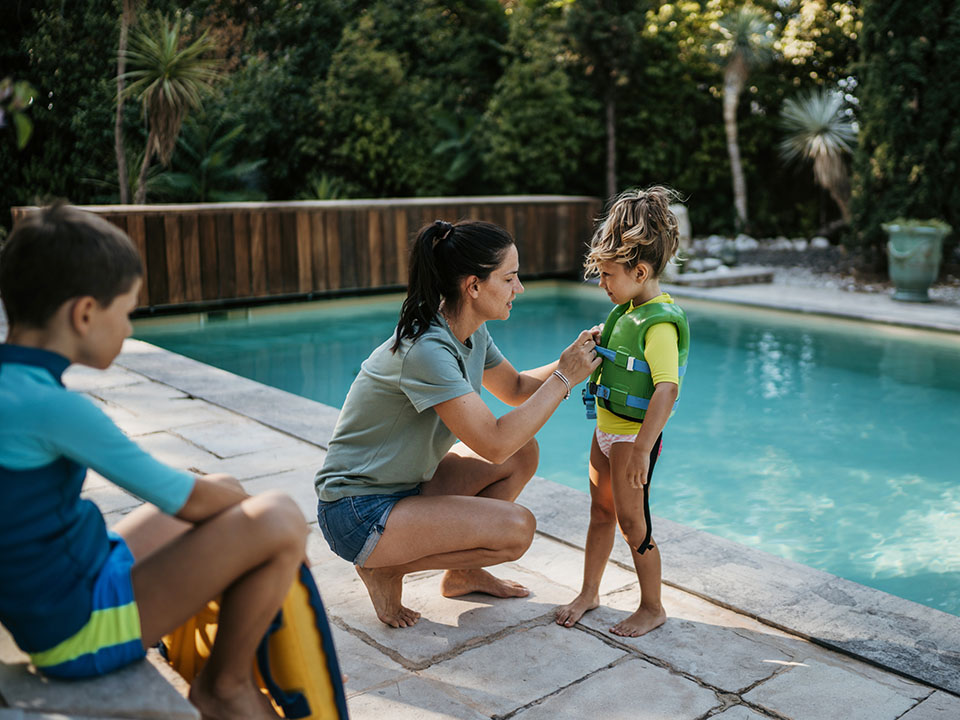
Non-swimmers and inexperienced swimmers should wear U.S. Coast Guard-approved life jackets. Avoid the use of “floaties” for young children so they don’t become dependent on them and take risks they may not be ready for.
5. Prepare for emergencies by:
- Making sure everyone in your home takes water safety, first aid and CPR courses.
- Keeping rescue equipment by the pool, easily accessible and in good condition — such as life rings, floats or a reaching pole.
- Having a phone poolside with emergency numbers posted. Also post your address for the benefit of guests, babysitters or even your young children who might not have your address memorized.
- Sharing safety instructions and pool rules with family, friends, babysitters and neighbors.
6. Institute pool rules.
- Don’t go in or near the pool without an adult.
- No pushing.
- No running.
- No diving.
- If someone is in trouble, get help quick.
- Use the bathroom, not the pool!
7. Know the legal risks of pool ownership.
No matter how many precautions you take, having a pool can still be a dangerous proposition. In addition to the personal tragedy of someone drowning in your pool, you as the owner are also subject to legal risks such as being sued. To minimize your legal risks:
- Follow all home pool safety rules, guidelines and laws for your area.
- Follow all of the safety instructions outlined previously in this article. Make sure you understand and follow all guidelines from the CPSC.
- Insist that everyone swims with a buddy — adults and children, members of your household and guests — swimmers and non-swimmers. Your adult guests should supervise their own children at all times.
- Don’t allow intoxicated guests in your pool.
- Consider removing your diving board.
- Protect uninvited guests, too! Even if they’re trespassing in your pool without your knowledge, you could be sued if children, teenagers or adults drown or are injured in your pool. So keep those fences, pool covers and pool alarms on and in good working order.
- Make sure your homeowner’s policy includes coverage for liability lawsuits as a result of swimming pool injuries or death. Some policies won’t cover pools with slides or diving boards, and they stipulate that there need to be safety measures in place.