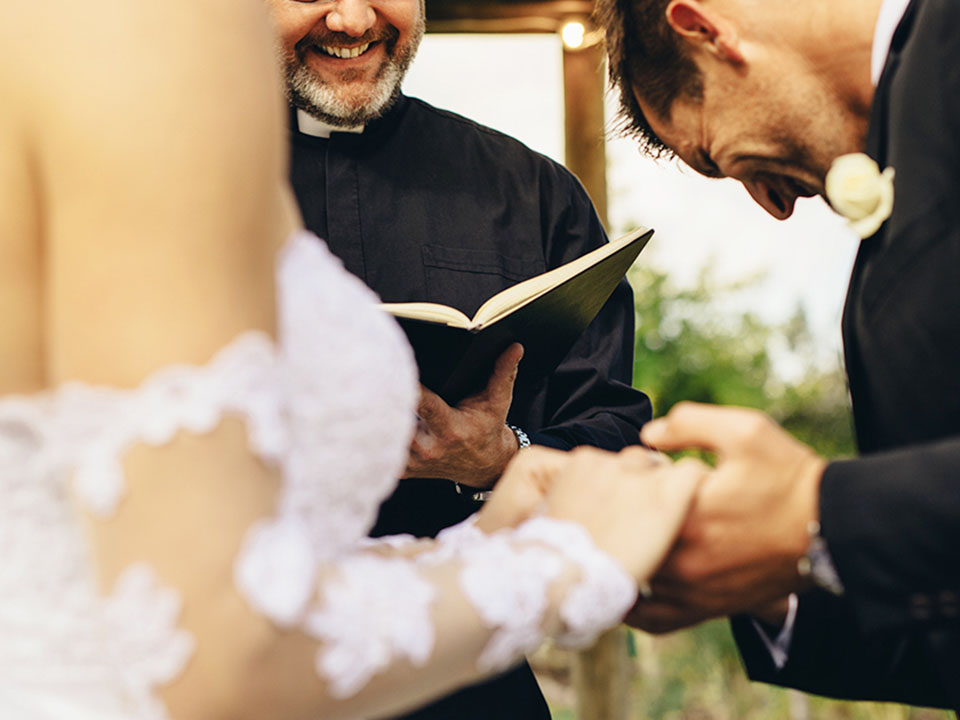
Have you ever been to a wedding where the officiant (the person performing the ceremony) could barely remember the bride and groom’s names, failed to say anything personal about them or bumbled his or her way through the proceedings? If you’re looking for something more personal and appropriate for your wedding, while also being legally valid, here are four tips that will help you find the right officiant for your ceremony.
1. Consider what type of officiant and ceremony you want
You might think your options are either a religious or civil ceremony, but there is a whole variety of choices within those two categories.
Common types of officiants/ceremonies include:
- Religious ceremonies: If you have a church, synagogue or religious organization you’re a member of, you may want your pastor, priest, rabbi or minister to perform the ceremony. These ceremonies are generally more traditional and will follow the customs of that religious organization.
- Interfaith ceremonies: Going this route is a way to have a spiritual ceremony even if you aren’t part of a religious community — or if you and your spouse come from different faith backgrounds. When you hire an interfaith minister, you will usually be able to make the ceremony more personalized than in a traditional religious setting.
- Secular ceremonies: A secular officiant can help you create any type of ceremony you want. These types of officiants can vary greatly, and you can really find someone to do almost anything you’ve dreamed of. When choosing a secular officiant, make sure they are certified and legally authorized to perform weddings in your state.
- Civil ceremonies: Many judges, justices of the peace and magistrates not only perform ceremonies at the courthouse but will perform a more personal ceremony at another location. Your local county clerk’s office should have a list of those who are available for wedding ceremonies — generally you work out the fee and specifics with the judge.
2. Meet with potential officiants.
To help make sure this person is the right fit for your ceremony and shares a similar perspective on marriage, you’ll want to do more than just call and ask if these people are available. Set up a time to meet with them if you can – or at the very least take the time for an in-depth phone conversation.
Ask yourself:
- Are they interested in getting to know you as a couple?
- Are they open to personalizing the ceremony?
- Do their views on marriage align with your own?
- Do they have rigid expectations – or flexibility?
A good officiant will want to understand your story so the ceremony doesn’t feel scripted or impersonal.
3. Treat your officiant like any other vendor.
This means asking for recommendations, reviews and referrals. Have your friends and family been to weddings with an officiant they loved? When you meet with the officiants you are considering, don’t be afraid to ask them for testimonials from previous people they’ve married. Some may even have video you can watch of them performing a ceremony so you can make sure their style and tone is the right fit.
Others might suggest you attend a ceremony they are performing so you can make sure you like what you see. Bottom line here: Do your research. Would you book a caterer without tasting their food or asking about previous experience? The officiant is just as important.
4. Confirm the officiant is legally recognized
Before you make your choice, confirm that your officiant is officially recognized/certified in your state and county. You should also make sure you are both clear on the officiant’s official duties, which usually include submitting the marriage license back to your local clerk’s office to be filed.
Once you’ve decided on an officiant, put everything in writing (just like you do with other vendors): how much you will be paying the officiant, when you have to pay them, what their duties entail (rehearsal and ceremony, what time they will arrive the day of), specifics of the ceremony (vows and readings chosen), etc. Now you can rest assured that your ceremony – and the person you’ve chosen to officiate it – will reflect you, your future spouse and the life you want to build together.
Choosing the right officiant helps ensure your ceremony reflects who you are as a couple – and sets the tone for the life you’re building together.
Once you’re past the wedding ceremony and ready to start planning a secure, prosperous and happy future together, learn more about how you can protect you and your family throughout life.